
As ‘Raiders of the Lost Ark’ turns 45, an archaeologist separates fact from fiction
Lara Fabian considers the myths of Indiana Jones
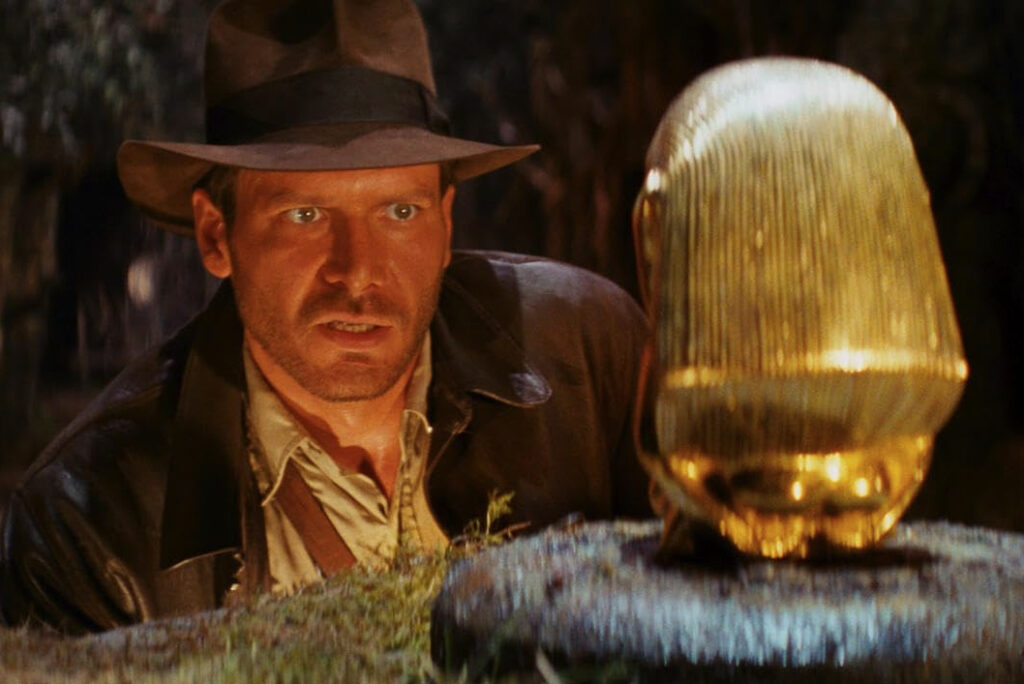
Indiana Jones was interested in shiny objects; in reality, UCLA professor Lara Fabian says, ancient garbage pits are more interesting.
| July 20, 2026
Forty-five years after its June 1981 release, “Raiders of the Lost Ark” is a cinematic treasure sealed in amber.
Although she has never been chased by a boulder and doesn’t carry a bullwhip, UCLA archaeology professor Lara Fabian is a real-life version of the main character, Indiana Jones. And while the movie takes some liberties depicting the job of an archaeologist, Fabian said she’s a fan.
“I didn’t see it until I was in grad school, already on the path to becoming an archaeologist,” Fabian said. “It’s Harrison Ford. It’s George Lucas. How can you not appreciate that?”
Fabian is an assistant professor of Iranian archaeology in the UCLA Department of Near Eastern Languages and Cultures, and she is a member of the UCLA Cotsen Institute of Archaeology. She spends her summers on real digs in the South Caucasus.
We asked her to help clarify what the film got wrong — and one thing it got right— even as it brought Hollywood glamour to the profession of archaeology.
Myth 1: Archaeologists like shiny objects.
Fabian says: False.
“This is a myth about archaeologists: That we want to find shiny gold things. The truth is, archaeology is the study of the human past. We’re not interested in the objects; we’re interested in what they tell us about people’s everyday lives in the past. A garbage pit is way better than a shiny gold bowl, because I can find out from a garbage pit what people were eating, what they were throwing away, what their households looked like.”
Myth 2: Nazis “discovered” the “lost” city of Tanis.

Lara Fabian
Fabian says: False.
“The Nazis did not, in fact, find the city of Tanis in 1939. There were excavations there in the 18th and 19th centuries. The other thing the movie gets a little wrong is that Tanis was destroyed in a sandstorm. Tanis had a much more typical course. It was on the Nile delta, and it gradually silted up and went out of use.”
Myth 3: Nazis were fascinated by the occult.
Fabian says: True.
“The Nazis were very interested in the occult, and this is something that goes all the way up to the top of the Nazi hierarchy. It comes from a search for the roots of Aryan heritage. They created a research institute dedicated to the study of the material culture that would help them prove the deep roots of Aryanness. So, weirdly enough, this strange part of the movie, the occult focus, is in fact a historical reality.”
Myth 4: Archaeologists are looking for a fight.
Fabian says: False.
“Luckily for me, unlike Indiana Jones, I’ve had absolutely no gunfights, no knife fights, no poison dates — none of those things have featured in my archaeological career. People think we spend our time digging holes, and that’s true. But part of our job is to document what we excavate in great detail, because archaeology is, in fact, a destructive practice. So, we do a lot of paperwork so that the people who come after us can know where exactly we found which piece of animal bone, or God forbid, a gold bowl.”
Myth 5: Archaeologists don’t like the movie.
Fabian says: False.
“I actually do like the movie. I didn’t see it until I was in graduate school, until I was already like, on the on the path, to become an archaeologist, but they’re fun, you know. It’s Harrison Ford, George Lucas; it’s an action movie; it’s great. How can you not appreciate that?”
Related story: Archaeology meets social media literacy in an innovative Fiat Lux seminar