
Archaeology meets social media literacy in an innovative Fiat Lux seminar
Sean Brenner/UCLA Humanities
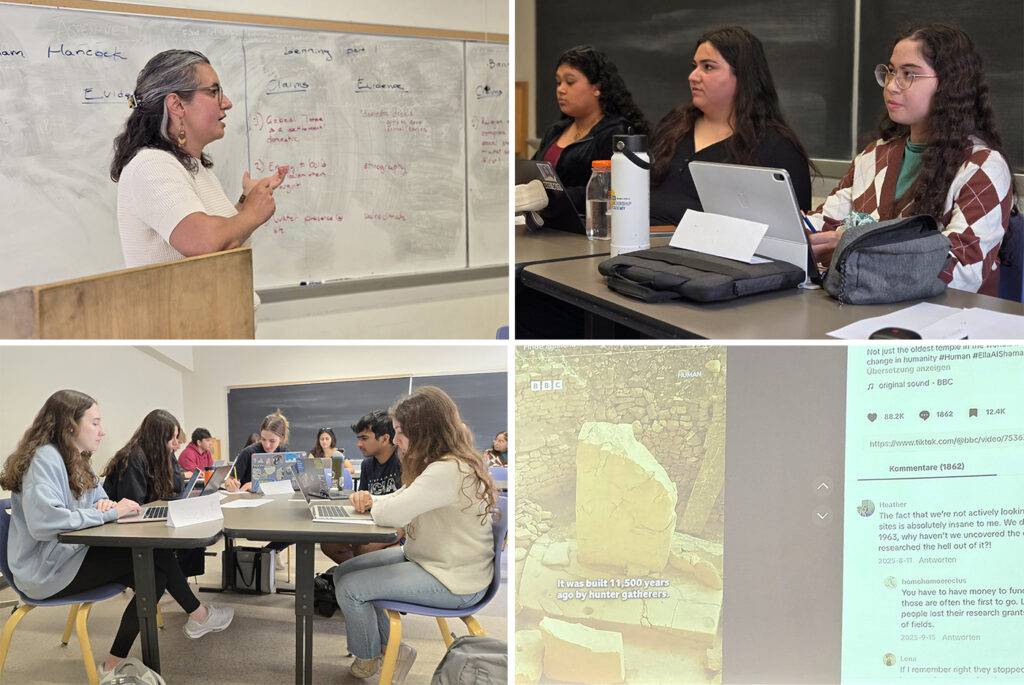
In one class session, Lara Fabian (top left) and students dissected narratives about Göbekli Tepe, an ancient site in modern-day Turkey, which has been the subject of questionable theories on social media (bottom right).
| June 3, 2026
What happens when a 12,000-year-old archaeological site becomes fodder for TikTok videos, and the subject of pseudoscientific theories? That’s the sort of question Lara Fabian asks students to wrestle with in a new Fiat Lux seminar.
Fabian developed the course, “#Archaeology: The Ancient Near East Goes Viral,” in response to the growing spread of misinformation and conspiracy theories — largely fueled by social media videos — about the ancient world. It’s a trend that, thanks to the rise of hyper-realistic AI-generated content, stands to worsen in the years ahead.
So Fabian’s class explores how misinformation, or “pseudo-archaeology,” is created and spread online, and it prompts students to consider how they can discern fact from fiction.
Fabian is a professor of Iranian archaeology in the Department of Near Eastern Languages and Cultures and a member of the UCLA Cotsen Institute of Archaeology. In a video interview, she offers the example of an ancient site called Göbekli Tepe in modern-day Turkey, which has been the subject of questionable theories online, before explaining why misinformation can spread so easily and suggesting how her students might apply lessons from the course to their other studies and even their lives outside of academia.
Fabian argues that those dealing with viral misinformation about ancient studies — or any other field of study, for that matter — shouldn’t abandon the internet but rather should use it more critically. She said she hopes her students take away from the class “a way of thinking about history and a way of thinking about information about history as it circulates in popular culture that’s maybe a little bit more rich, and a little bit more textured, than the versions that we often get through social media.”
Watch the four-minute interview with Fabian below, or on YouTube; or visit this page for an audio-described version of the video.