
UCLA launches nation’s first digital humanities department
Future-ready students, forward-looking research: The new department brings a humanistic approach to AI, other emerging technologies
David Esquivel/UCLA
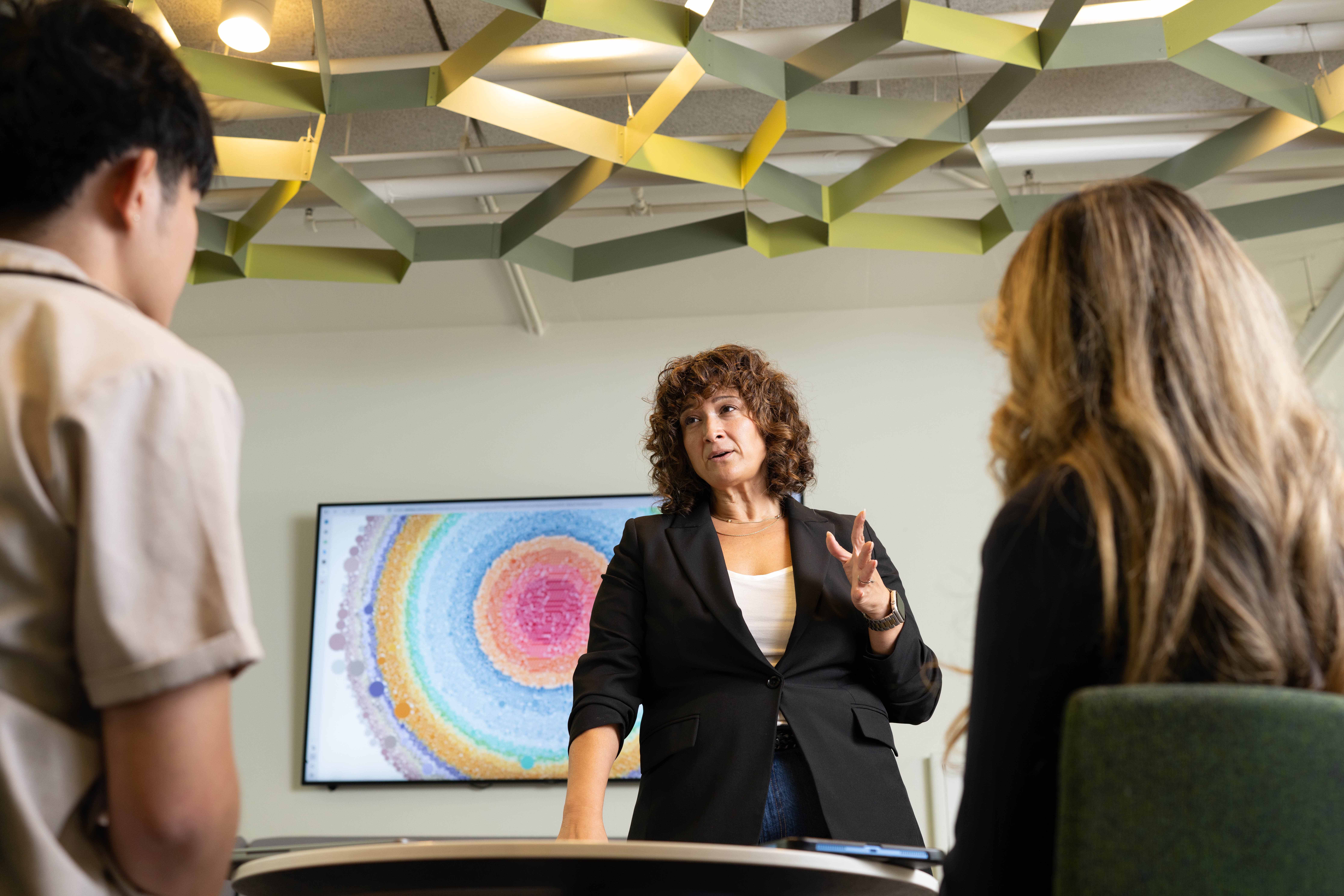
Wendy Kurtz, a project scientist and lecturer in digital humanities, helps students examine how data and information is structured, interpreted and used.
| August 27, 2026
UCLA has become the first university in the United States to establish a freestanding department of digital humanities. The move positions UCLA at the forefront of an increasingly important and in-demand field — one that promises to have a leading role in defining the principles and ethical standards that shape the digital future.
In broad terms, digital humanities encompasses two complementary pursuits. The discipline applies research techniques from the humanities to understand digital technology and explain its impact on people, institutions and societies; and it employs digital tools to explore and document the many aspects of what it means to be human — spanning literature, language, cultural studies and other aspects of humanistic study.
Digital humanities is not a new discipline at UCLA; for more than 20 years, the campus’s faculty have been leaders in digital-centered research in the humanities, social sciences and arts, and in 2010, UCLA launched the Program in Digital Humanities, a unit of the UCLA College Division of Humanities. Originally intended to accommodate about 25 students per year, the program grew quickly. During the most recent academic year, more than 200 UCLA undergraduates minored in digital humanities, making it the largest minor in the UCLA College and the second-largest overall on the campus.
In all, some 750 undergraduates and more than 30 graduate students took digital humanities courses during the 2025–26 academic year.
With the establishment of the Department of Digital Humanities, UCLA will now be the first university in the nation to award a bachelor’s degree in the subject.
Building skills for the future of work and research
“This signals UCLA’s belief not just in the appeal and marketability of digital humanities as an academic major but in its relevance and pertinence to a 21st-century education,” said Dominic Thomas, chair of the new department and UCLA’s Madeleine L. Letessier Professor of French and Francophone Studies. “We need to be thinking and designing curricula that will define what our graduates end up doing as they go about imagining and shaping new futures in the global world.”
To that end, the department’s teaching and research span the many ways technology and the humanities increasingly intersect. Students will learn to use advanced digital tools to explore human culture, history and experience while developing the critical skills to assess how these technologies are created and used, whose perspectives they reflect, and how they affect people and society.
The department’s launch is especially timely given the sudden omnipresence of artificial intelligence — and growing concerns that its rapid adoption is outpacing the development of effective safeguards.
“We are at a crossroads,” Thomas said. “There is no one subject right now that is more being discussed — in sophisticated terms or lay terms — than questions about AI.”
Not surprisingly, then, some of the many topics UCLA digital humanities scholars explore are related to the moral and ethical implications of AI.
“For our society to have technologies that serve humanity and are more just — and not simply designed to generate profits or serve corporate interests — it’s critically important that there are people prepared to steer and steward them responsibly,” said Todd Presner, a professor of European languages and transcultural studies who co-led the departmentalization process and previously served as the chair of the Program in Digital Humanities. “We need students who deeply understand the histories of these technologies and how these models behave and function.”
Presner added that people with backgrounds in languages and literature will play an essential role in understanding and shaping AI, especially because large language models are trained on centuries’ worth of human-generated writing.
That said, digital humanities faculty interests and course offerings range far beyond the subject of AI. Courses in the major focus on subjects like user experience and design, social media analytics, digital mapping and geographic information systems, and using 3D modeling to bring ancient cities to life.
The department will launch with roughly 18 affiliated faculty members with wide-ranging interests. For example, Miriam Posner, a UCLA professor of information studies, researches the way that data and technology shape everyday life; her forthcoming book examines the hidden history of supply-chain management technology. Safiya Noble, an internet studies scholar and professor of gender studies and African American studies, is a renowned scholar on topics such as how the algorithms powering commercial search engines reinforce racial and gender biases.
The department will be home to cutting-edge research led by professors like Presner, who is leading an effort to understand the impact of AI and social media on Holocaust narratives, and Danny Snelson, a professor of English and design media arts who uses digital media to make games, poems and art installations that produce new ways of understanding everyday technologies.
“UCLA Digital Humanities has humanities at its core and also is interdisciplinary in nature,” said Alexandra Minna Stern, dean of the Humanities Division. “In addition to deep and varied humanistic knowledge, our faculty members bring expertise from data science, the social sciences, information studies and numerous other disciplines, which creates the sort of cross-pollination of ideas needed to create meaningful learning opportunities for our students and advance this important field.”

Many digital humanities courses emphasize group project work, which recent graduates say has been excellent preparation for their careers.
Students also recognize the benefit of digital humanities’ interdisciplinary scope. Kylie Bach, who graduated from UCLA this spring with a minor in digital humanities, said that she gained insights she has carried with her into her marketing position at J.P. Morgan Chase.
“Coming into the workforce with a knowledge of these technology tools but also an educational background rooted in the humanities and history is really important,” she said. “A lot of corporate jobs emphasize different technologies and AI tools, but people can forget that they have human implications and that we can use these tools to solve humanity’s problems. Digital humanities gave me those wider perspectives.”
Bach added that a significant portion of the work for her digital humanities classes involved group projects — useful experience for graduates entering the workforce in a wide array of fields.
Creating a ‘clear pathway for students’
Wendy Kurtz, a project scientist and lecturer who teaches the program’s 120-person introductory course and other classes, said digital humanities courses are designed to be accessible for all students, whether their primary academic interests are technology and computer science or humanities and social sciences.
“It’s going to create a clear pathway for students, especially those who may not be coming in with a lot of technical expertise, to integrate those tools,” she said. “But also, it’s going to give our more technically minded students a new perspective from which to approach their comfort zones. They get to work with messy data and think about what we do with gaps in that data, or how we read the way that data has been structured. Those are things they don’t necessarily get challenged to do in more traditional classes.”
The ultimate goal, Kurtz said, is to prepare UCLA students to become thoughtful architects of current and future technologies.
“We’re preparing students not just to navigate and use technology ethically but to critically shape it as they move into the workforce,” she said. “They’ll really be thinking about who’s building these systems, what kind of perspectives these technologies encode and who they serve. The more we can instill a commitment to critically examine the impact of new technologies on real people, the more it will drive ethically grounded systems as we move forward.”
Capturing employers’ attention
Recent UCLA graduates who, like Bach, minored in digital humanities say that the experience has not only proven valuable in their post-college careers but in some cases caught the attention of recruiters.
“In all of my job interviews, whether it was with Microsoft, Google or other companies, people didn’t pay attention to my computer science degree; they saw my digital humanities minor and would say, ‘Whoa! What is that?’” said Kedaar Sridhar, a 2022 graduate who is an AI fellow at Harvard University and a co-founder of Grantlytics, a platform that helps grant-seeking organizations identify funders and funding opportunities.
“Everyone applying to the types of jobs I was interested in were computer science majors,” he added. “So when recruiters or hiring managers saw that I minored in digital humanities, they would always ask about it, and that became a part of my introduction.”
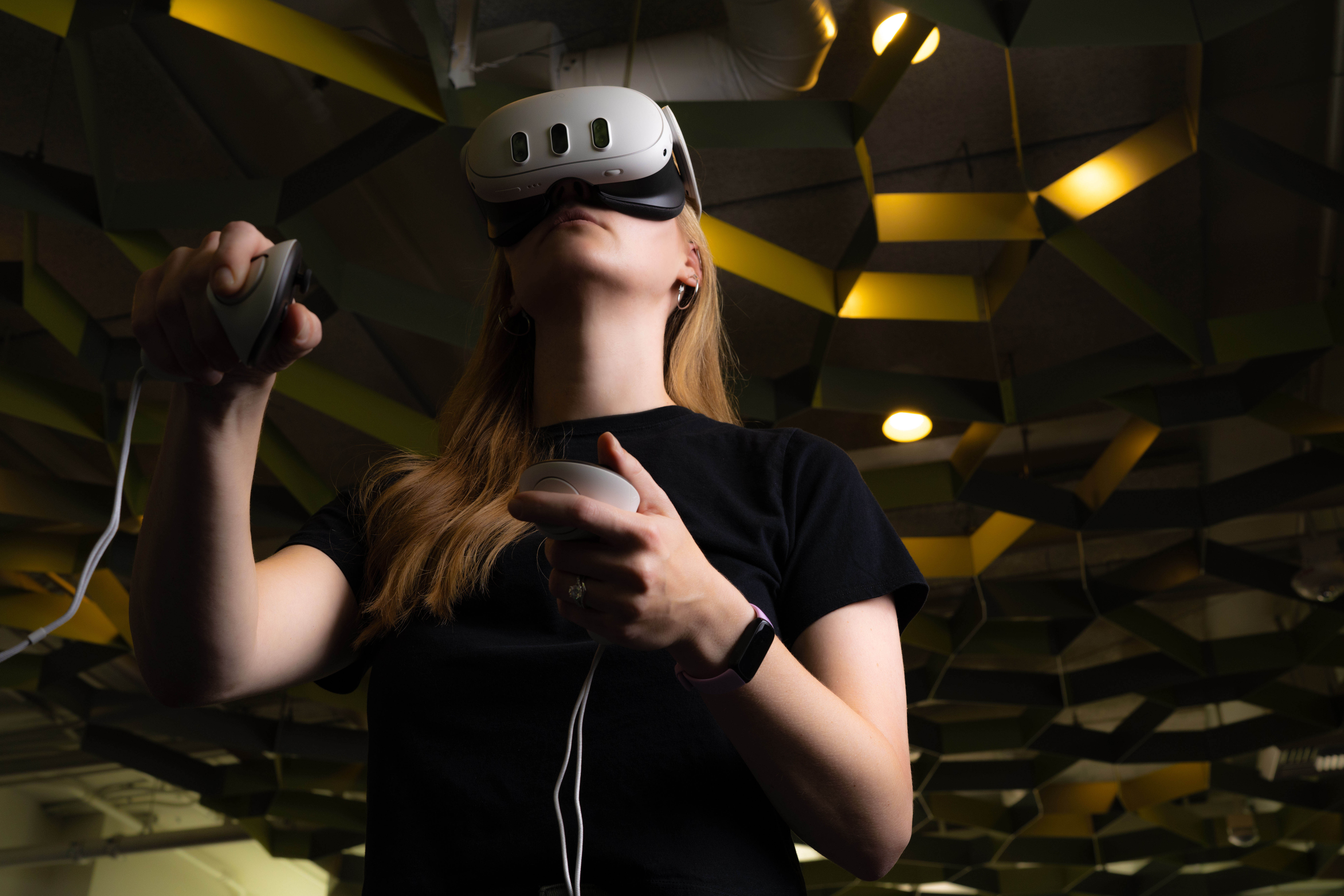
Seeing technology through a human lens: The new major brings humanistic inquiry to the technologies transforming our world — and puts those technologies to work exploring the human experience.
Sridhar said he would explain to potential employers that the minor gave him practical training on how to explain technical concepts to various stakeholders, effective ways to present data and how to incorporate research into product pipelines. “They would say things like, ‘That makes so much sense because that’s what we actually do in our jobs.’”
Cynthia Gong, a 2023 graduate, said her digital humanities experience has paid unexpected dividends in her work in real estate private equity, even though hers isn’t a traditional “tech job.” For one thing, she said, one of her UCLA courses highlighted techniques for displaying data so it’s accessible for users with disabilities. When Gong learned that one of her higher-ups is colorblind and couldn’t discern between the reds and greens on one presentation, she was able to step in with her knowledge of colorblind-friendly color palettes.
“Also, in my job and the finance industry in general, we’re analyzing so much data, and another thing that was emphasized in digital humanities classes was thinking about things like, how is the data sourced, who’s providing it and what are the gaps, and recognizing how data can be biased,” she said. “So those concepts are constantly popping up in my work, and I’m constantly thinking about how valid and how clean our data is.”
Those experiences, along with the dynamic course offerings and groundbreaking faculty research only lend more credence to the idea that humanities and technology cannot exist in isolation.
“The formalization of the digital humanities department reflects a growing recognition that these two areas should be studied together,” Kurtz said. “The technologies transforming our world are also shaping our culture, our history and the ways we create and share knowledge. Our students need the critical and technical grounding to engage with those technologies thoughtfully — and to influence what comes next.”