
Ursula Heise elected to American Academy of Arts and Sciences
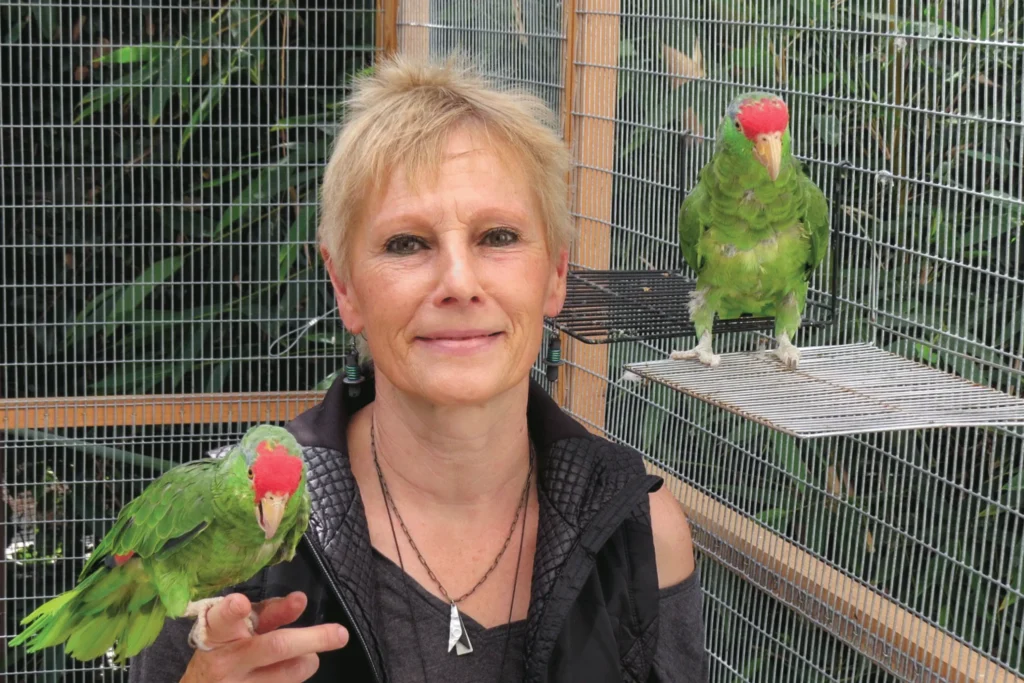
Courtesy of Ursula Heise
Heise’s innovative projects span a wide range of media, including not only literature and journalism, but also documentary film, video games and animation.
| April 30, 2026
Ursula Heise, a pioneer in the field of environmental humanities, has been elected to the American Academy of Arts and Sciences, one of the nation’s oldest and most prestigious honorary societies.
Heise, a distinguished professor of English and member of the UCLA Institute of the Environment and Sustainability, examines important ecological topics like extinction, species endangerment and wildlife conservation through the lens of culture and media.
As co-founder and director of UCLA’s Laboratory for Environmental Narrative Strategies, or LENS, she focuses on cross-disciplinary research that explores how storytelling — through literature, films, journalism, video games and other platforms — can influence not just what we know about the environment but how we act on it.
Importantly, Heise puts those ideas into practice, collaborating with students and colleagues to tell the story of our planet through inventive projects like “Urban Ark Los Angeles,” a documentary exploring the world of endangered red-crowned parrots in a city setting, and “Grand Theft Eco,” a series of animated films that turned a well-known video game into a vehicle for environmental awareness.
“A lot of my work over the last 30 years has focused on developing the interdisciplinary field of environmental humanities, which researches how environmental crises are shaped by different languages, cultures and histories,” Heise said. “I’ve been particularly interested in how different environmentalisms engage with scales of place and time, and how narratives across a variety of media shape communities’ relationship to other species. Environmental justice and multispecies studies — especially the question of how we might think about justice and diplomacy in relation to nonhuman species — have been central to this research.”
In 2024, she received the Biophilia Award, an international honor presented annually by the BBVA Foundation, for her leading role in advancing the study of environmental humanities. The award carried a prize of 100,000 euros, which Heise distributed among three recipients: LENS, the Bird Conservation Fund, and the Sociedad Española de Ornitología, a leading bird conservation organization in Spain.
Her recent publications include “Environment and Narrative in Vietnam” (2024), which she co-edited with Chi P. Pham of the Vietnam Academy of Sciences, and “Unsettling Extinction” (2026), co-edited with Roman Bartosch and Kate Rigby of the University of Cologne, Germany. She also is co-editor of the “Literatures, Cultures and the Environment” book series, published by Palgrave Macmillan.
“I look forward to joining the community of scholars at the American Academy of Arts and Sciences, where environmental humanities and multispecies studies are still sparsely represented,” Heise said. “It’ll be a great opportunity to make humanistic research on environmental issues more visible and to build cross-disciplinary networks to engage with the most urgent crises of the 21st century — those of climate change and biodiversity loss.”
Heise is one of four UCLA faculty members — the others are Eva Baker, Elizabeth Ligon Bjork and Angela Riley — and 252 new members overall elected to the academy this year.
Founded in 1780 by John Adams, John Hancock and other early American scholars and scientists, the American Academy of Arts and Sciences is an independent research center that convenes leaders from across disciplines, professions and perspectives, with the aim of producing independent and pragmatic studies that inform national and global policy and benefit the public.
Notable individuals from each generation have been elected to the academy, from George Washington and Albert Einstein to UCLA’s Andrea Ghez, Jared Diamond and Chancellor Julio Frenk.
“We celebrate the achievement of each new member and the collective breadth and depth of their excellence — this is a fitting commemoration of the nation’s 250th anniversary,” said Laurie Patton, the academy’s president. “The founding of the nation and the academy are rooted in the inextricable links between a vibrant democracy, the free pursuit of knowledge and the expansion of the public good.”
Heise and the other new members will be inducted in October at the academy’s headquarters in Cambridge, Massachusetts.