Ongoing

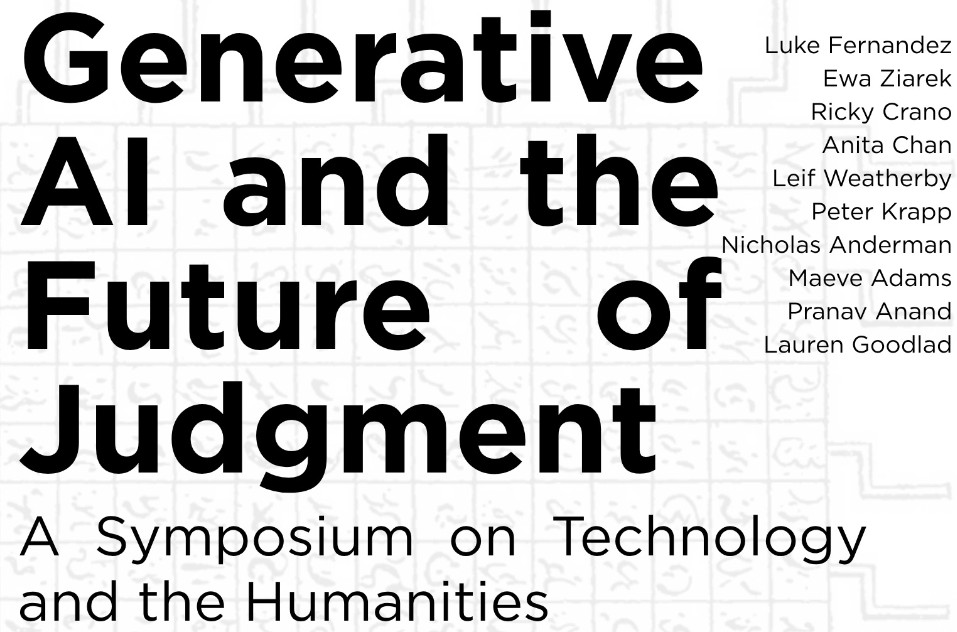
Generative AI and the Future of Judgment: A Symposium on Technology and the Humanities

UC Irvine and Zoom

Generative AI and the Future of Judgment: A Symposium on Technology and the Humanities will focus on generative AI/machine learning from a humanities perspective, particularly on the work of computer scientist Joseph Weizenbaum and philosopher Hannah Arendt. Weizenbaum was a computer scientist who created the early chatbot ELIZA, after which the famous “ELIZA effect” is named. ELIZA and its users’ relationships to it presciently predicted humans’ overidentification with chatbot interlocutors. Weizenbaum also felt strongly about the role of the humanities in understanding computer science and technology: " have a greater familiarity with an ambiguous, intractable, sometimes unreachable world that won't...

FREE
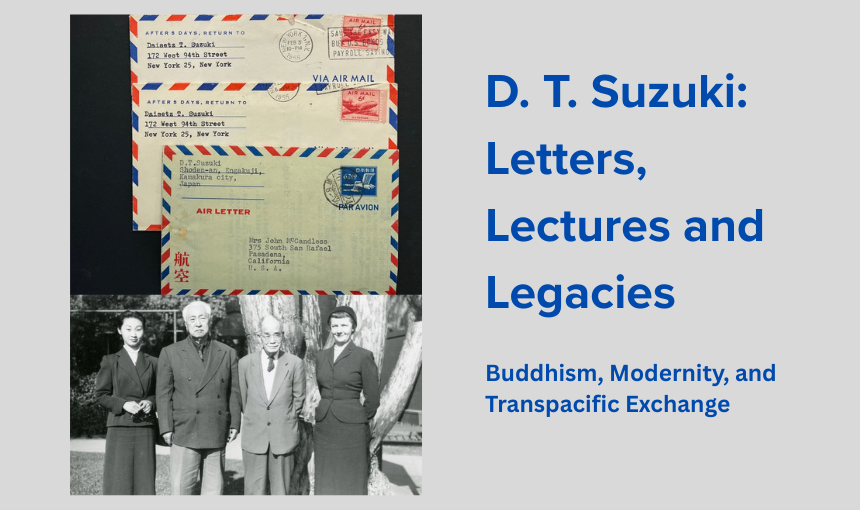
D. T. Suzuki: Letters, Lectures and Legacies

Charles E. Young Research Library, Main Conference Room 280 Charles E Young Dr N, Los Angeles

This Workshop explores the cultural, religious, and intellectual legacy of Daisetsu Teitaro (D. T.) Suzuki (1870–1966), the preeminent figure who introduced Zen and Mahayana Buddhism to the modern Western world. This event brings together scholars, curators, and practitioners to discuss and reflect on Suzuki’s polymath contributions and their enduring, cross-cultural impact. Discussions will span a broad range of topics, including interpretations and evaluations of Suzuki’s Buddhist philosophy and translations, archival discoveries of his lecture manuscripts and interpersonal correspondence, and his connections with Japanese American communities and local religious institutions. Generously funded by the UCLA Center for Buddhist Studies, this one-day...

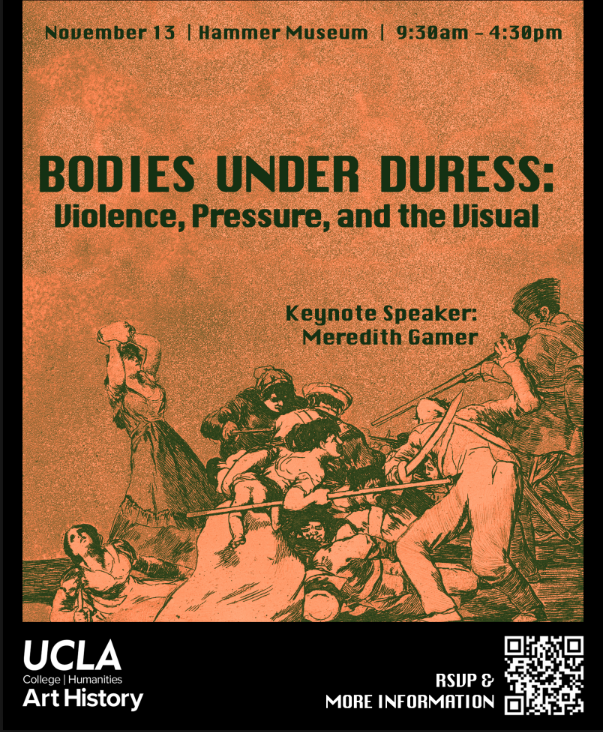
UCLA Department of Art History Graduate Symposium, Fri. Nov. 13

The Hammer Museum 10899 Wilshire Blvd, Los Angeles

This year’s annual UCLA Department of Art History Graduate Symposium will be held at the Hammer Museum’s Nimoy Studio on Friday, November 13, 2026. This year’s theme is Bodies Under Duress: Violence, Pressure, and the Visual. Across art and visual culture, bodies have served as both the objects upon which power is exercised and the means through which its effects become visible, imaginable, and contested. Bodies Under Duress invites scholars to consider how visual and material practices register the forces exerted upon bodies, while also asking not only what happens to bodies under violence, but how violence is made possible,...