
Research with a chance of meatballs
Using resources at the Clark Library, Alfons Rosales explored centuries-old English recipes
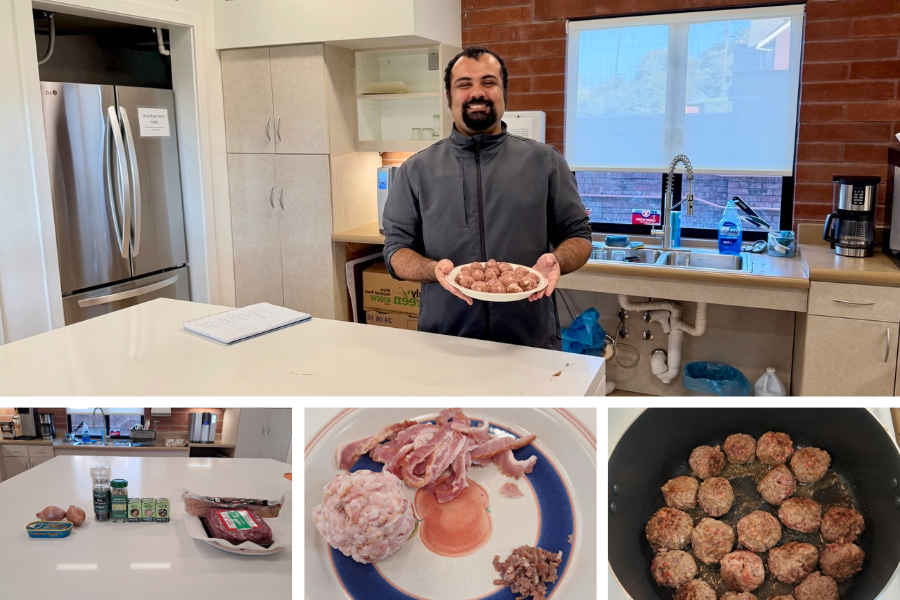
Matthew Fisher (top); Courtesy of Alfons Rosales
Alfons Rosales, an English and religious studies major, said the 300-year-old recipe (with a few modifications) was a hit with friends.
| April 10, 2026
Alfons Rosales’ recent independent studies project produced a rather unusual result: a tasty plate of meatballs.
And not just any meatballs, but ones he cooked by adapting a 300-year-old recipe.
Using resources at the UCLA William Andrews Clark Memorial Library, Rosales, a fourth-year English and religious studies major, was researching differences between English cuisine of the medieval and early modern periods. He also hoped to assess how recipes evolved between the 15th and 18th centuries, and to learn how difficult it would be to replicate dishes from texts that were hundreds of years old.
The Clark Library is home to more than 300 books featuring recipes and cooking from the 16th to the 21st century, including many handprinted volumes from before 1820.
Rosales said food tends to be an overlooked subject in literary studies.
“Food is very much on my mind whenever I look at a topic,” he said. “I wanted to analyze these cookbooks in an academic sense, much like analyzing a piece of literature; to see if there was a marked change in the way information was conveyed, and also if the tastes of the foods themselves changed.”
Basing his research on four manuscripts, Rosales researched food histories, cooking techniques and common ingredients. He learned, for example, that recipes in medieval texts were not very specific, both in describing the dishes and laying out ingredient quantities; later texts from the early modern period were much more detailed.
“In the early modern books, there is still some vagueness, but they were more comforting to work with,” Rosales said.
Throughout the project, Rosales prepared four dishes from the recipes he found — including one for savory meatballs, from a recipe in “Receipts of Pastry & Cookery: For the Use of His Scholars” by Edward Kidder, dating to the early 1700s.
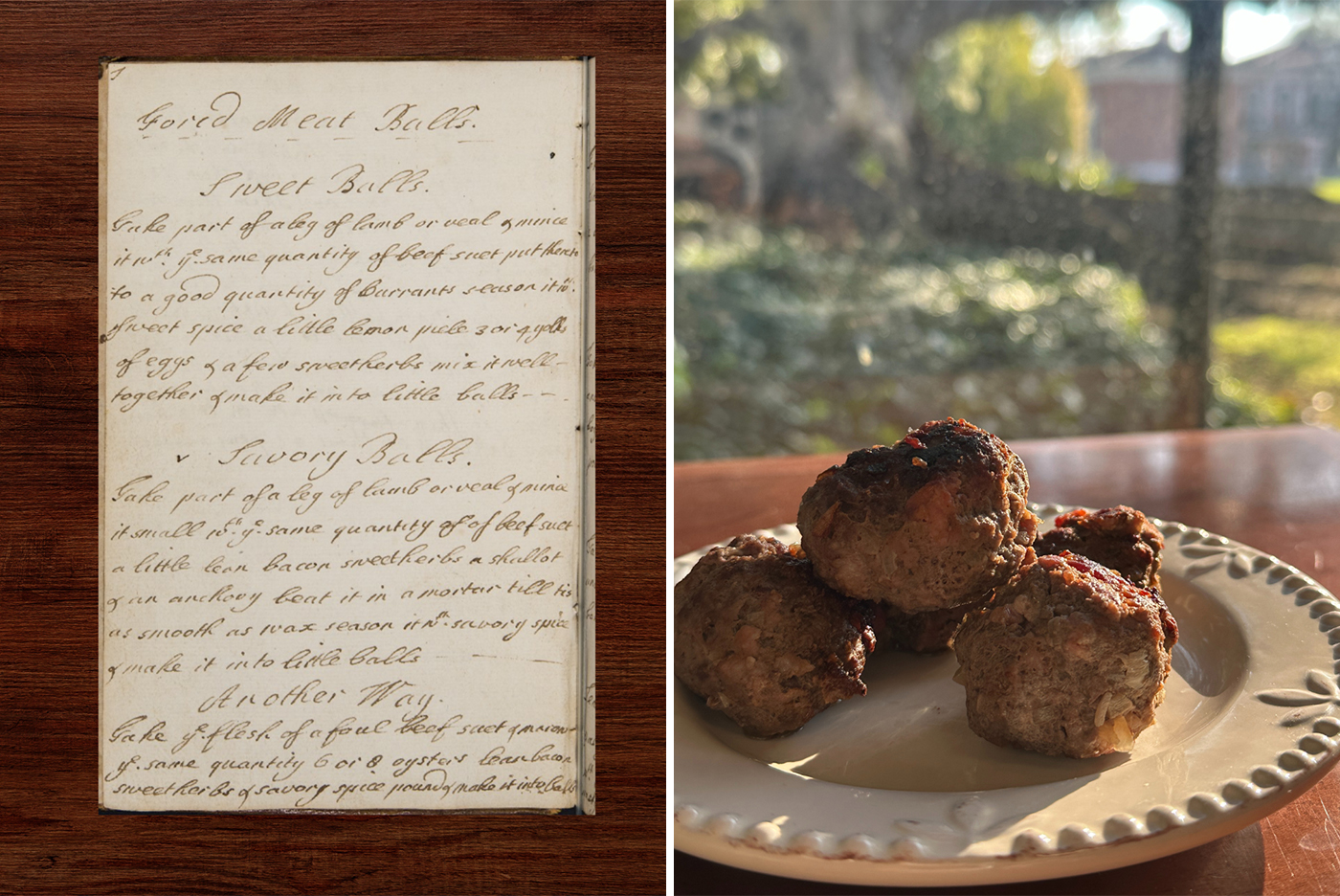
Rosales tried his hand at the recipe in the center of the page, left. The result, he said, was “like eating a chunk of steak, but in meatball form.”
The dish took two hours to prepare and cook, and used only nine ingredients, although Rosales made a few simple substitutions. The recipe called for suet, the fat from around beef kidneys. To avoid a trip to a specialty butcher, Rosales used lean meat and bacon fat instead. The recipe also called for the use of shallots and sweet herbs, a rather ambiguous description. To mimic sweet herbs, Rosales combined basil, black peppercorns, cloves, mace and nutmeg. One surprise: The recipe also included anchovies, which Rosales did use.
And the result? Rosales said the meatballs came out so well that he has made them for friends and retained the recipe for future use. He said the flavor profile is similar to pho, the savory aromatic Vietnamese soup.
“That’s the best approximation,” he said. “They were sweet, savory and beefy. They’re very filled with umami — it was just like eating a chunk of steak, but in meatball form.”
Rosales’ mentor for the project, Matthew Fisher, an associate professor of English, said the research also revealed interesting cultural insights about early modern England.
“Cooking from any recipe is always an act of interpretation,” Fisher said. “Alfons’ project made visible how acts of interpretation are anticipated in early modern recipe books, and how much work the cook does to move from recipe to meal.”