
The Undergraduate Writing Center is here to help!
Peer advisers offer free one-on-one support for writing assignments, resumes, lab reports, personal statements and more
Sean Brenner/UCLA Humanities
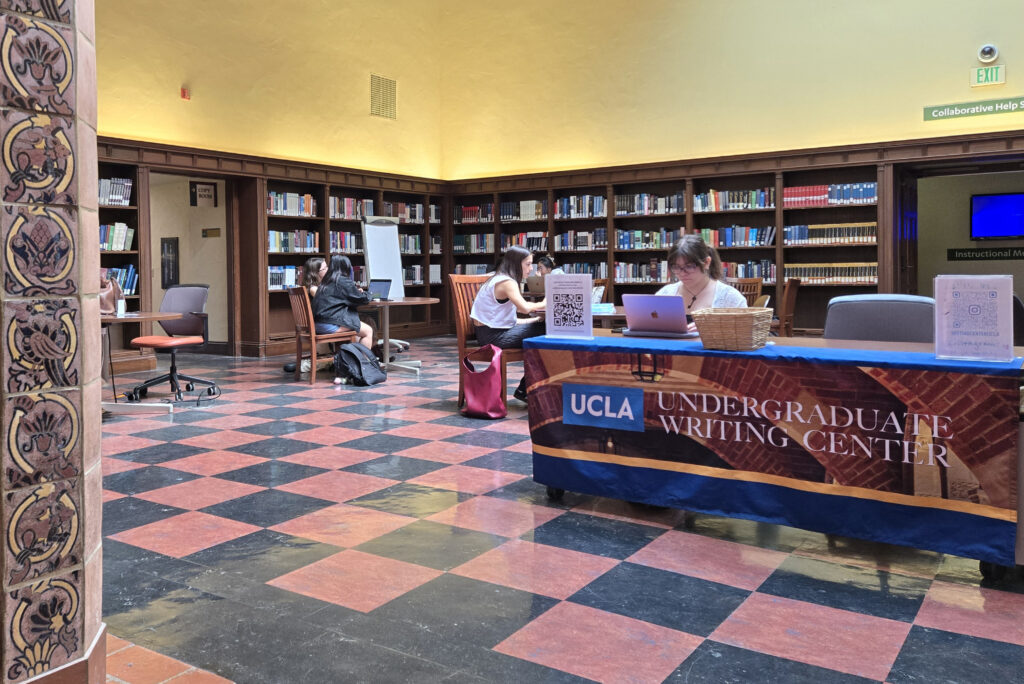
The Undergraduate Writing Center in session at Powell Library. The center offers support on a wide range of writing formats — not just class assignments.
| February 12, 2026
“Writing is easy. You only need to stare at a blank piece of paper until drops of blood form on your forehead.”
That sentiment, attributed to the 20th-century journalist and screenwriter Gene Fowler, may resonate with many UCLA students, whether they’re majoring in English or engineering.
For any undergraduate navigating UCLA writing requirements or any writing-intense course, busy schedules and large class sizes can make it feel challenging to find support on their journeys to becoming better, more confident writers.
The Undergraduate Writing Center is here to help. The center offers one-on-one tutoring with peer learning facilitators, or PLFs, undergraduates trained to teach writing skills across a range of assignments and topics. And PLFs can offer support on a wide range of formats — not just class papers, but also emails, lab reports, resumes, cover letters, personal statements for graduate school applications and more.
“The ideal situation is for students to come out of their sessions confident in their writing, and to continue to build on their writing skills with somebody they’re comfortable with,” said Tara Prescott-Johnson, director of the writing center and a continuing lecturer in UCLA Writing Programs.
Just one way to quantify the writing center’s impact: A Writing Programs report in 2023 found that students who use writing center have an average first-year GPA of 3.62, and an average cumulative GPA of 3.73 when they graduate.
Students can schedule appointments on campus, on the Hill or virtually. There are occasionally late-night hours, too: For a few nights during Week 5 of winter quarter, the center was open until 2 a.m. (Visit the writing center website for hours and locations.) The Undergraduate Writing Center also administers and trains staff for the Philosophy Writing Center and the History Writing Center, where students enrolled in classes in those departments can learn discipline-specific writing techniques.
We asked two current students and one recent graduate — all of whom have served as writing center PLFs — to share their insights about what makes it such a valuable resource.
Caitlin Brockenbrow
Second-year English major
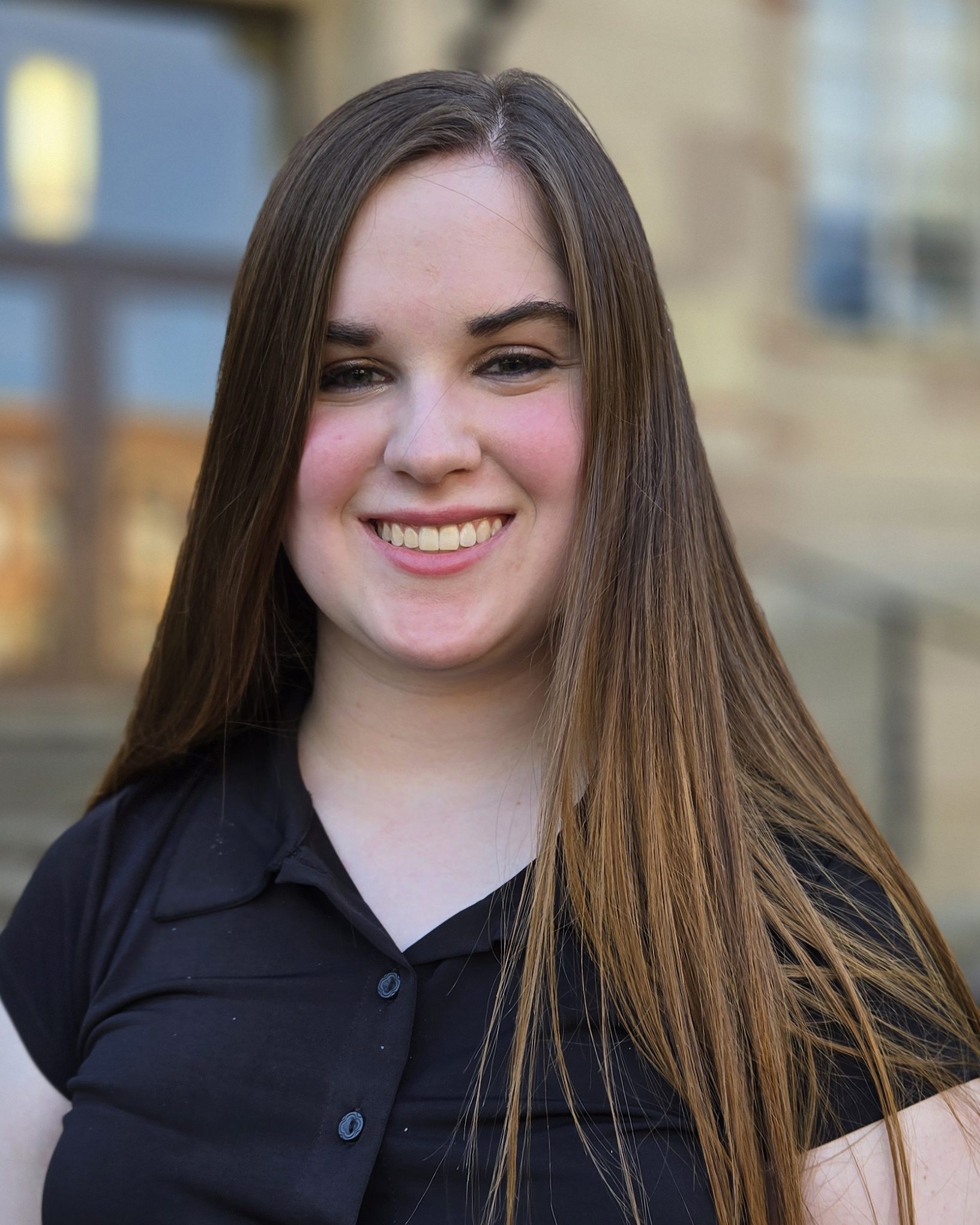
Caitlin Brockenbrow
Caitlin Brockenbrow volunteered as a peer tutor when she was in high school, so when she learned about the Undergraduate Writing Center during her first year at UCLA, she applied for a job immediately.
In her writing center sessions, Brockenbrow uses a dialogue-focused approach, prompting students to explain their ideas aloud, as if they were talking to a friend.
“Once, I had a student talk through their ideas, and they articulated a clear, nuanced argument without even realizing it,” Brockenbrow said. “When I pointed out that they had just stated their thesis, there was an immediate realization that their ideas were not only valid, but already strong.”
Brockenbrow said the UWC’s casual setting lets students feel comfortable having actual conversations about their assignments, which in turn helps them gain confidence. And, she said, for students who are nervous about asking a faculty member for help with their writing, working with a fellow undergraduate can feel less intimidating.
“There is no better feeling than being a resource for someone and watching a moment of understanding wash across their face,” Brockenbrow said, “especially when you can remember being in their position.”
Hero Jay
Third-year comparative literature and French major
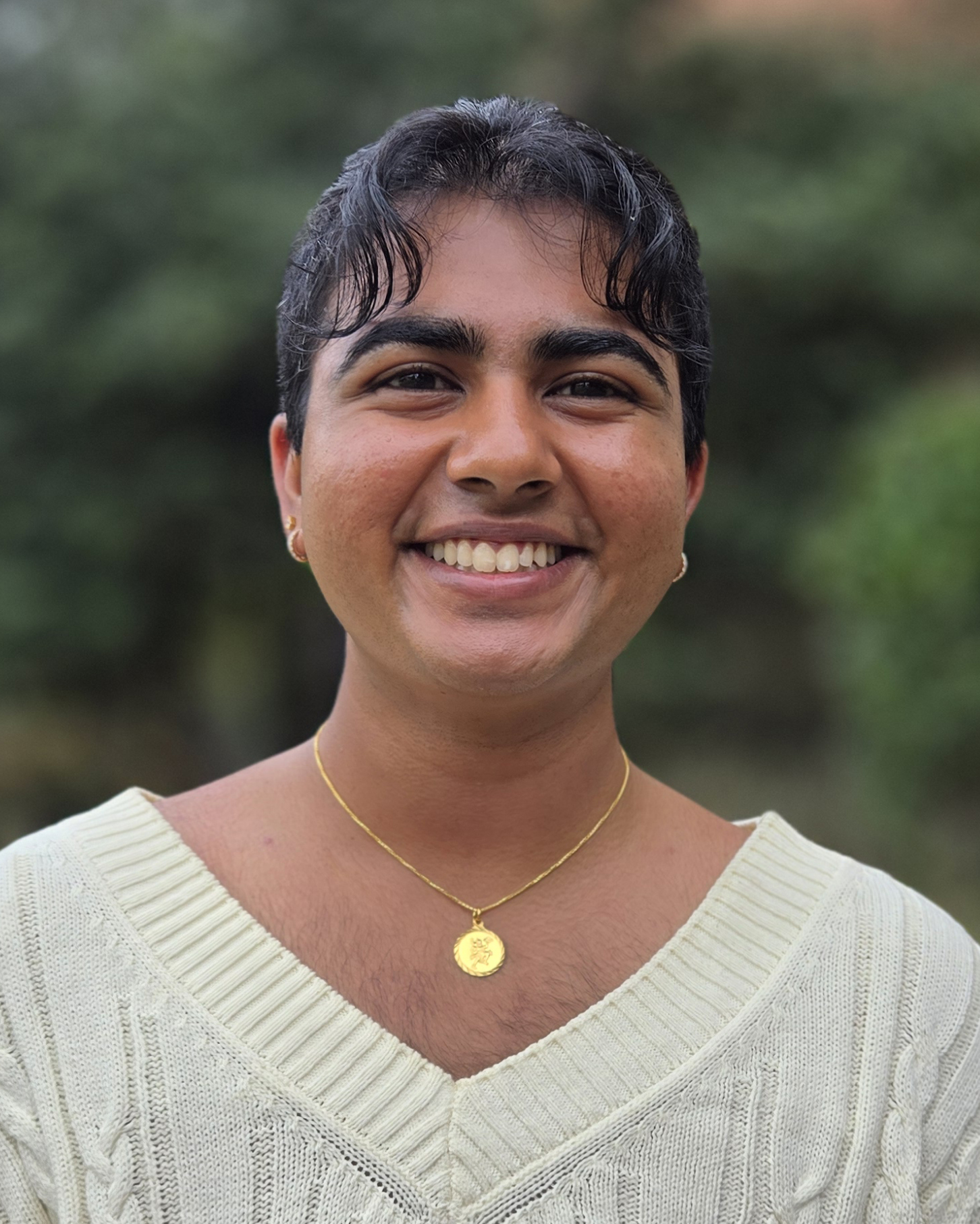
Hero Jay
In his own coursework, Hero Jay studies language at its most abstract and global levels. As a PLF, Jay homes in on language at its most basic and essential.
And it’s precisely because the center creates space for students to work on foundational writing skills, Jay said, that it is an important resource for students whose first language is not English.
“I’ve had students from international backgrounds who didn’t quite understand what a well-written thesis looks like,” Jay said. “Professors may assume their students already know that, and they don’t always go over the purpose of a thesis statement.”
In this era, students routinely consult chatbots for writing help, but Jay said writing center sessions offer something that tech solutions don’t: “Instead of resorting to AI for writing support, students can look to the UWC, where we’re trained to teach crucial writing skills and build student confidence, not just churn out rhetoric.”
Hatim Malek
2021 graduate with degree in political science
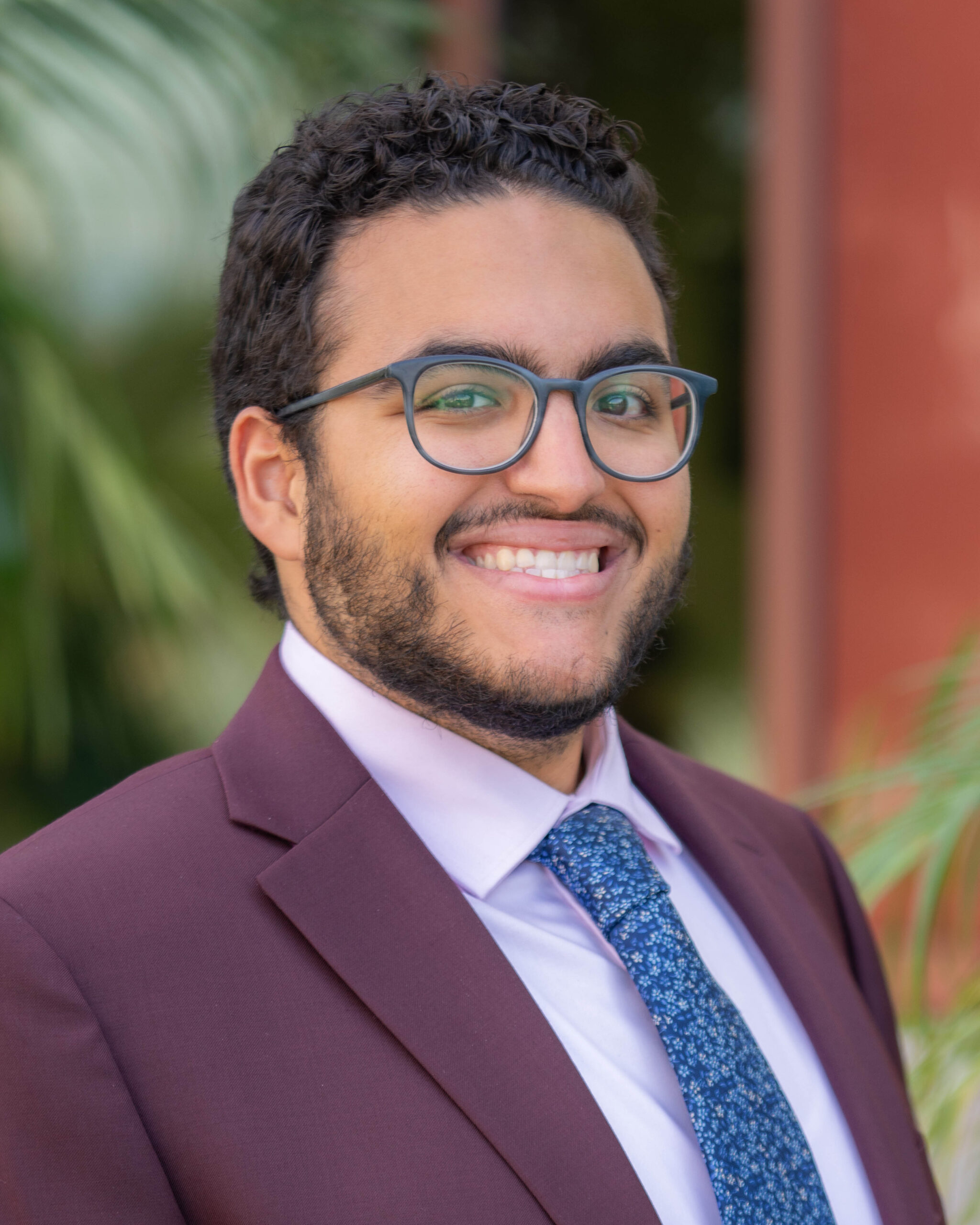
Hatim Malek
As a teenager, Hatim Malek loved reading but hated writing. By the end of high school years, he had learned how to find joy in writing, too, and he drew from his own transformation as a writing center PLF.
Malek, who currently teaches history and debate at Windward School in Los Angeles, said his early struggles with writing helped him bring empathy to his work at writing center. He especially took pride in helping students who initially believed that writing was “not for them.”
“As someone who also once thought of himself in the same way, I would offer them a piece of advice that had worked for me,” Malek said. “Like remembering that the reader cannot assume their thought process. Or encouraging them to reread their thesis after they completed the essay.”
While one of the writing center’s goals is to help students feel more secure in their writing, Malek said that it can be a great resource even for students who already feel confident in their abilities. For one thing, he said, it offers a great opportunity to practice a fundamental aspect of academic life: peer-review.
“In reality, the UWC is a microcosmic example of what the general process of education entails,” Malek said. “The submission of work, the processing of feedback and the willingness to push oneself to improve.”