
Distinguished Teaching Award winner frames writing as catalyst for change
Tamar Christensen, Writing Programs lecturer, is among 12 faculty honorees for 2024-25
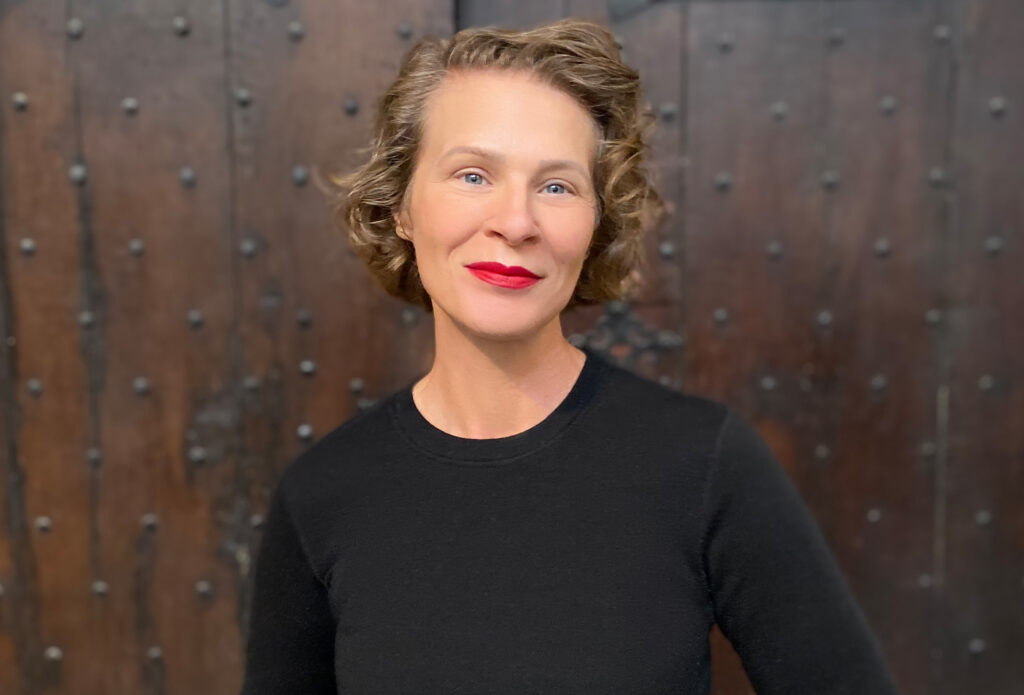
Randy Fallows
Tamar Christensen encourages students to write not only from data and research, but from their own experiences.
| July 14, 2025
In Tamar Christensen’s English composition classes, writing is not only a form of communication or a means for connection. It’s a catalyst for change.
“I want my students to see that their educations are very applicable to their real lives,” said Christensen, a continuing lecturer in UCLA Writing Programs. “That connection — between the academic and the real — is where the spark happens.”
Her ability to find that spark is one reason Christensen is among the winners of UCLA’s 2024–25 Distinguished Teaching Awards.
The awards recognize “creativity in the classroom, dedication to helping students thrive and commitment to continually enhancing the educational experience” and it carries a prize of $6,000. Christensen, 11 other faculty members and five teaching assistant honorees will be celebrated at the Andrea L. Rich Night to Honor Teaching this fall. (View the full list of honorees here.)
Christensen said her classroom approach stems from her own nontraditional path. A first-generation college student and U.S. Navy veteran, she earned her bachelor’s degree over the course of 11 years. On top of that, her academic training was in history rather than writing pedagogy. But that journey, she says, shaped her mission to help students connect classroom lessons to their life experiences.
In courses like Topics in the Sciences and Writing 2, Christensen uses climate change as a through line. The first reading assignment in one of her Writing 2 classes, for example, might be the latest report from the United Nations’ Intergovernmental Panel on Climate Change.
Inspiring action
If climate change is one of Christensen’s narrative threads, it’s the practice of analytical writing that forms the core of her teaching. She guides students to take their understanding of the material they read and transform it into thoughtful, personal analysis — principles detailed in “Own Your Perspective: A Concise Guide into Content and Form,” the 2016 textbook she coauthored with her husband, Randy Fallows, who also is a Writing Programs continuing lecturer.
“Rather than just having students analyze and annotate an IPCC report, I encourage them to think about what facts they’re starting to understand that scare them about their future,” said Christensen, who also holds affiliations with the UCLA Laboratory for Environmental Narrative Strategies and the UCLA Rothman Family Institute for Food Studies. “That’s where we take writing out of the theoretical or the passive and place it squarely in the subjective and the personal.”
Then, she gets students to consider everyday solutions to climate change and to try them out in their own lives, so they can write about the issues informed not only by data and reports, but from experience. The goals: Building an ability to communicate effectively with an audience, and to make arguments that inspire action.
That approach resonates with students like Nilaya Kanuri, a 2025 graduate who majored in molecular, cell and developmental biology.
“Her class reminded me of how it actually feels to learn, and to feel a sense of achievement,” Kanuri said. “For the rest of our lives, I’m going to need to write and talk to people in a way that creates connections, and she gives students the means to talk with people who might not agree with us — either to persuade or just to form a connection.”
Christensen also leads graduate TAs through a year-long writing pedagogy course, and she has taught service learning classes in partnership with the nonprofit Nourish LA. In each setting, she aims to empower students to see themselves as agents of change.
Among the former students who took up that charge is Sneha Thirkannad, whose experience in two of Christensen’s classes inspired her to pursue a career related to sustainability or social justice. After graduating in 2020, Thirkannad worked on health equity and environmental justice issues, and during her just-completed MBA at Duke University, she worked with three sustainability startups.
“If not for Tamar, I would’ve still been pursuing orthopedic hand surgery and would not have been able to work on any of those things,” Thirkannad said. “So I’m very grateful that she was able to show me what other paths were out there that would contribute to a greener and healthier world.”
Elevating students’ voices
Students also acknowledge Christensen’s tendency to elevate their voices during classroom discussions. Nishanth Tharakan, an applied mathematics major who begins his second year at UCLA this fall, noted that Christensen often positioned herself “off to the side” while allowing students to lead conversations in an English Composition 3 class.
“Her uniqueness comes from her willingness to let her students speak first; she treats us like adults,” he said. “I could tell she always enjoyed hearing her students’ ideas for writing.”
For Christensen, the news of her teaching honor was “overwhelming,” she said, in part because it reminded her of the support she has received from her Writing Programs colleagues.
“It is the most collegial department I’ve ever, ever, ever seen,” she said. “My colleagues don’t just want to mentor each other — they want to support each other and help each other become better teachers. When I learned about the award, all I could think about is the incredible amount of guidance and mentorship I’ve gotten from real experts in my department, who have guided me both formally and in unofficial ways.”
March 2025: A community-engaged English composition course is building more confident writers
July 2024: Kip Tobin, Kyle Scott receive UCLA Distinguished Teaching Awards