
A connection forged by language
Maltese is spoken by only about 530,000 people worldwide, but it sparked a friendship between 2 UCLA grad students
Sean Brenner/UCLA Humanities
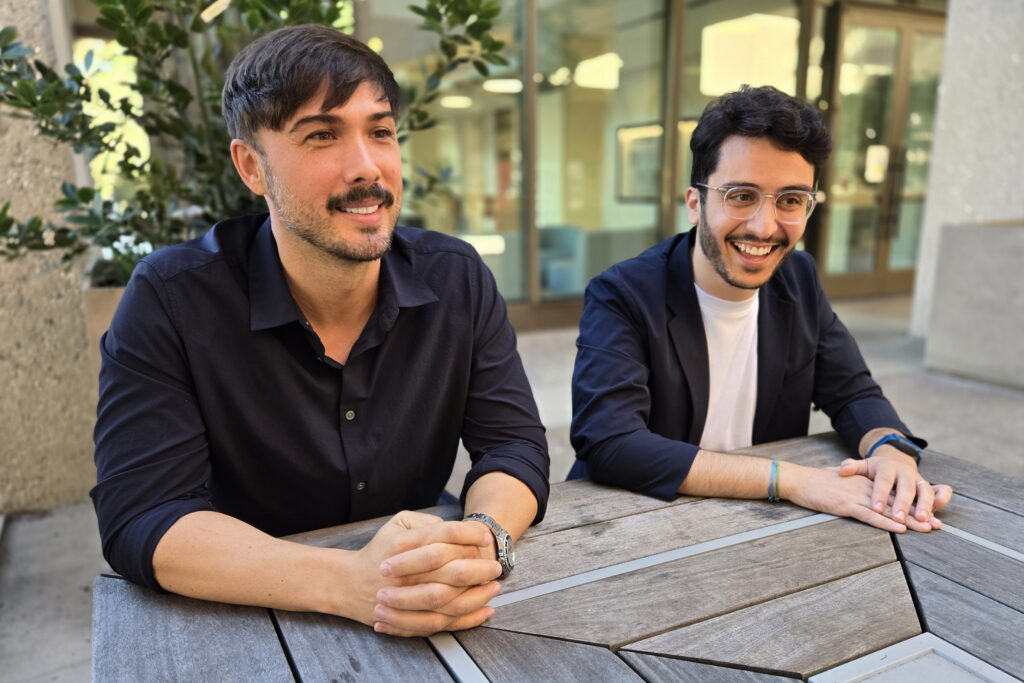
Richard Assaley, left, and Glen Spiteri. “I know that as I go further into my language journey, I have a wonderful person to expand my knowledge with,” Assaley said.
| January 9, 2026
If you’re looking for an example of how language can bring people together, look no further than Richard Assaley and Glen Spiteri.
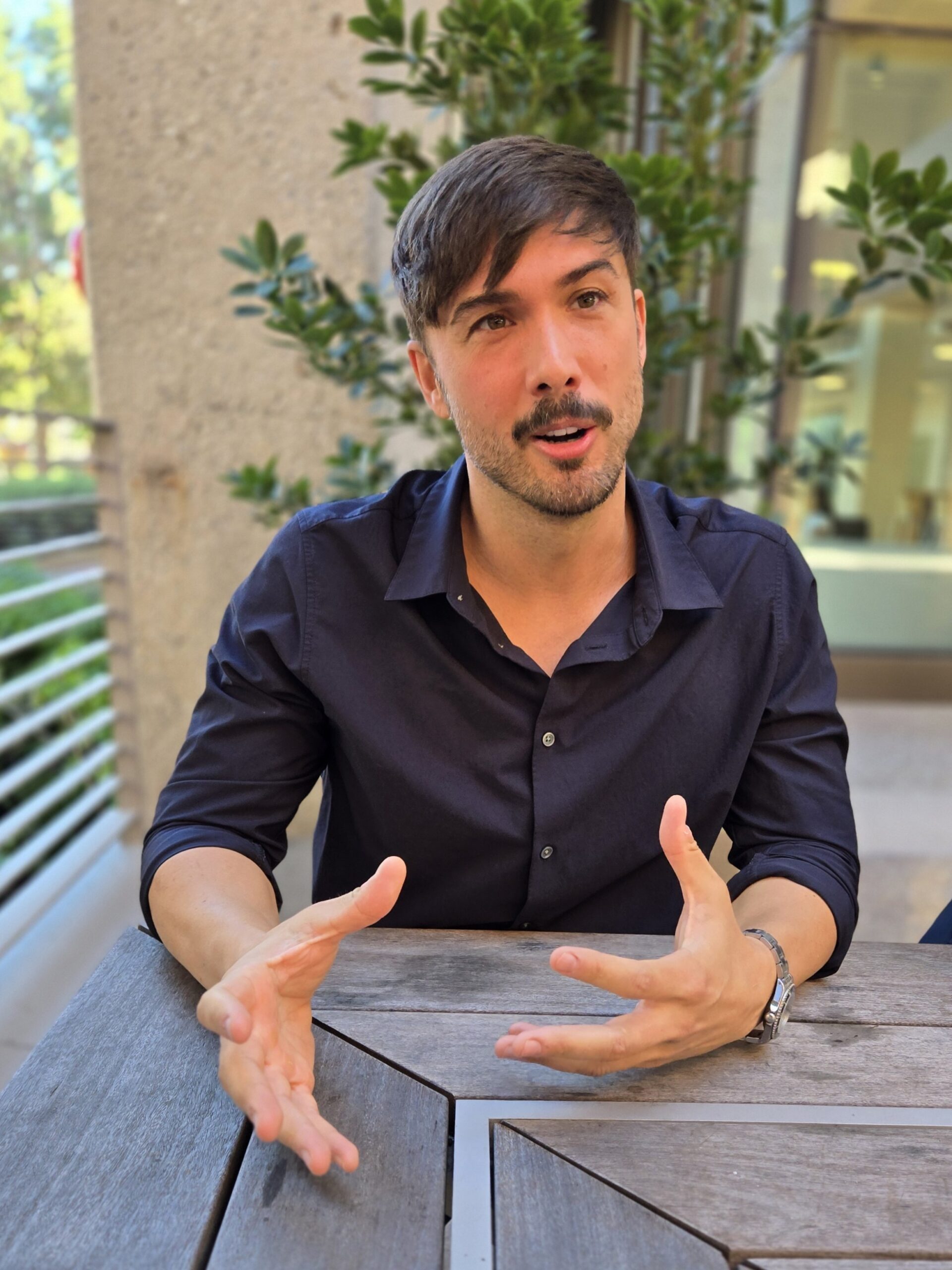
Assaley is a doctoral student in the UCLA Department of Near Eastern Languages and Cultures. His research focuses on the question of who decides what languages are considered Arabic. One of his specific areas of interest is Maltese, a language that Assaley had been learning and exploring since his days in community college.
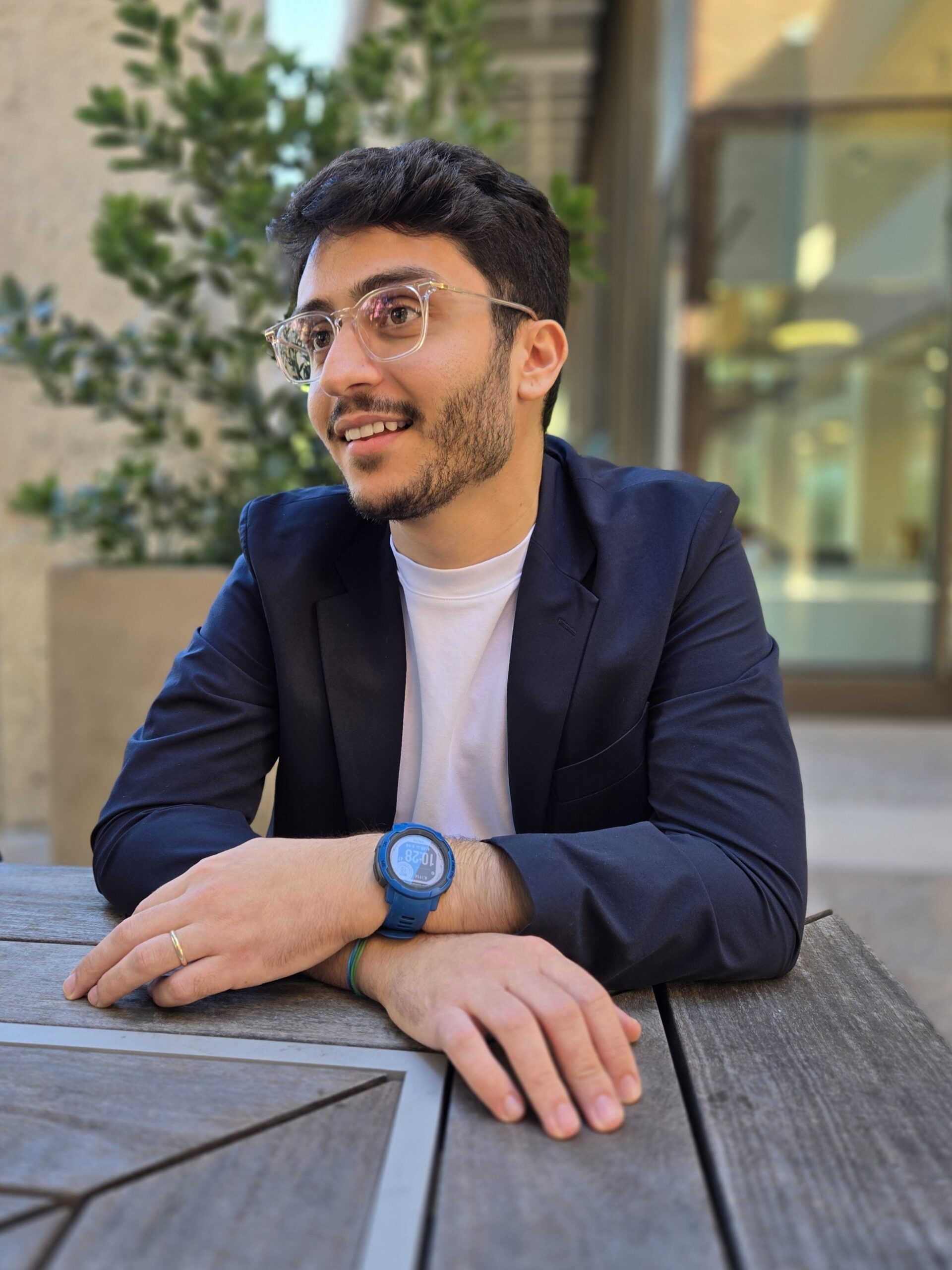
Spiteri, meanwhile, is a doctoral candidate in cognitive psychology. His research interest — understanding what motivates people to act altruistically — has little connection to Assaley’s. But in recent months, the two have become fast friends because of another meaningful link: Spiteri is one of only two current UCLA students from Malta.
► Celebrate the power of languages at UCLA’s World Languages Day, Jan. 21
Malta is a small island nation located in the Mediterranean Sea, between Sicily and northern Africa, with a population of around 570,000. Worldwide, only about 530,000 people speak Maltese; in the U.S., there are probably just a few thousand Maltese speakers.
Before the two met at the beginning of fall quarter, Assaley had been wondering whether there were native Maltese speakers in Los Angeles he could connect with. And Spiteri, who has been at UCLA since 2023, has — not surprisingly — found it challenging to connect with others who are fluent in his native language, 6,700 miles from home.
Fortunately, a friend told Spiteri about Michael Cooperson, a UCLA professor of Arabic and chair of Near Eastern Languages and Cultures, whose research interests include Maltese and who is Assaley’s faculty advisor.
Richard Assaley
“I had given up on finding Maltese speakers in L.A., so finding Glen was a great gift,” Cooperson said. “I’m delighted that Rich can learn real, live Maltese instead of just the academic version.”
In an interview, Assaley and Spiteri reflected on their serendipitous connection and how their friendship has enriched both their academic and personal lives.
How did you meet?
Glen Spiteri: One of my former mentors and collaborators knows someone who co-directed a popular Maltese TV program, and I learned that Professor Cooperson had worked on research about the show. Being Maltese, it is super rare to encounter anyone else who’s researching our language and culture. So I reached out to Dr. Cooperson, and he introduced me to Rich.
Richard Assaley: At the beginning of my graduate program, I asked Dr. Cooperson if there was a local community of Maltese speakers I could get in touch with. Although there are some Maltese circles in Michigan, New York, Chicago and San Francisco, he said to not get my hopes up about finding people in Los Angeles.
But at the start of fall quarter, Dr. Cooperson said, “Guess what!” and he told me about Glen. We set up an appointment to meet, and everything fell into place.
What languages is Maltese similar to, and what makes it unique?
Spiteri: Maltese is unique because it is the only Semitic language to be written in a Latin alphabet; it’s also the only Semitic language to be an official EU language.
But from my perspective, it has a very Semitic structure — a lot of our verbs come from Arabic or have Arabic influence. However, I think our nouns and adjectives are closer to the Sicilian dialect of Italian. The language has also adopted some English when it comes to technological terms, like “computer,” “keyboard” and “TV.” But for the most part, I think, it operates on a Semitic structure.
I was trying to find someone who speaks the language that I’m trying to learn everything about. And then to also have that person be somebody that you really like and want to hang out with, that’s super cool.
Assaley: This is where a very interesting discussion emerges. Oftentimes, an Arabic speaker will hear Maltese or see it written, and they’ll say, “This is Arabic, right?” While there’s a linguistic basis for stating that as fact, there are also certain social implications of Arabic as a language category that make that assessment a little unfair — but that’s more about the category than anything else.
Structurally, Maltese is Arabic. It developed from Sicilian Arabic, which itself is a North African variety. However, Maltese developed in isolation for a long time; since medieval times, it hasn’t really been connected with the rest of the Arabic-speaking world. Because of that isolation, it maintained features from classical Arabic that no other spoken variety has, but in addition, a huge part of its vocabulary is derived from Romance languages. Like Glen said, it has a lot of Sicilian and standard Italian words.
How has your connection with each other influenced your scholarship?
Glen Spiteri
Spiteri: One of the first things I spoke to Rich and Dr. Cooperson about was this phenomenon in moral psychology called the moral foreign language effect, where bilinguals or multilinguals tend to display more of an affective connection with their native language. So, they’re typically more likely to make more deontological judgments and decisions when they speak in their native language than when they speak in a non-native language.
For example, when I use Italian, which is not my native language, my reasoning takes on a more utilitarian or cost-benefit character. By contrast, when I use Maltese, my moral reactions tend to feel more immediate, emotional and intuitive.
I’m curious to see how we can connect this mode of communication with modes of thinking about morality, so I hope to pursue this in my own research at some point.
Assaley: I always have questions for Glen about the language. For example, I might ask him, “Do you actually say this phrase?” and he’ll let me know if it’s a figure of speech that’s still used, or if we would only see it in very old Maltese texts.
Primarily, I’m just really happy to know him. But aside from being a great friend, he’s a really good resource for learning about Maltese.
What does it mean to have someone you can connect with over this language?
Assaley: It almost seemed like fate. Coming into my doctoral program, I was trying to find someone who speaks the language that I’m trying to learn everything about. And then to also have that person be somebody that you really like and want to hang out with, that’s super cool.
I never thought I’d come across someone else here who speaks Maltese. A different part just comes out of you when you’re speaking your native language.
Spiteri: Coming to UCLA from Malta, the odds of this happening are completely stacked against you — I never thought I’d come across someone else here who speaks Maltese. I feel like I can connect with Rich in a way that I can’t connect with other people when I’m speaking English. A different part just comes out of you when you’re speaking your native language.
Recently, we had an exchange over Instagram about curse words. It was hilarious to see that Rich was familiar with these words — and we got to learn that several Maltese curse words are identical in Lebanese. In both languages, people use them in a very particular, casual way. It was so cool to make that connection.
So it’s a huge pleasure to help Rich learn the language and practice it, and also get to learn from him about my own culture and background.
Assaley: Those are my proud moments, when I can ask Glen, “Did you know this about your own language?”
It’s all really exciting, because I know that as I go further into my language journey, I have a wonderful person to expand my knowledge with.