
Shirley Cruz uncovers deeper meaning in vampire literature
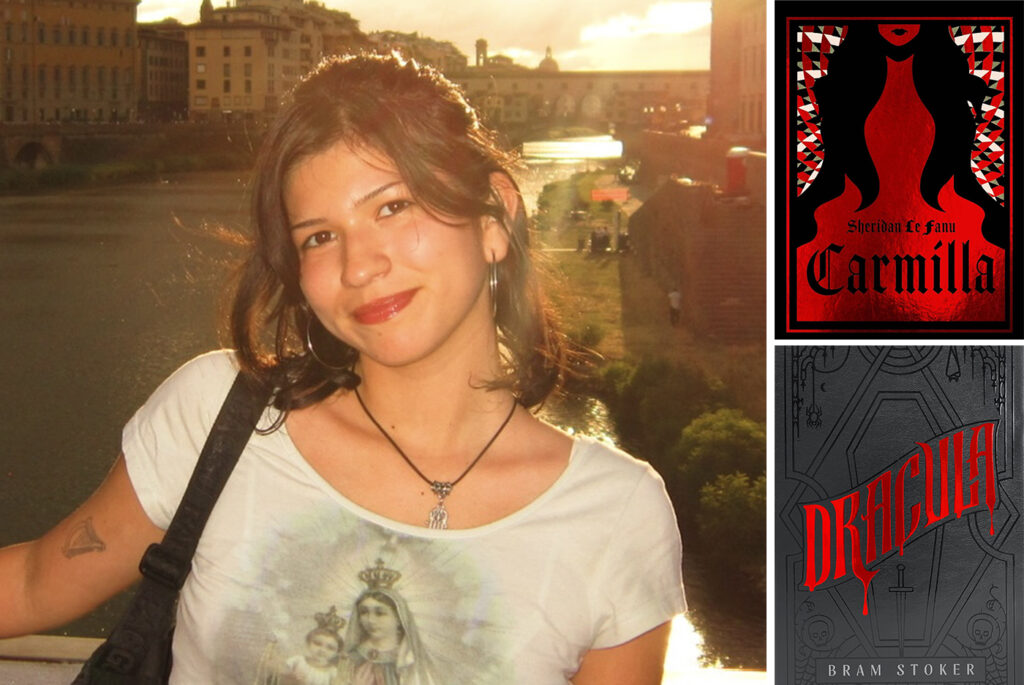
Courtesy of Shirley Cruz (portrait)
Shirley Cruz’s research topic began to take shape when she recognized the disparity in scholarship about “Carmilla” and “Dracula.”
| January 7, 2026
Shirley Cruz had long been interested in Gothic literature. But a course she took during her first quarter at UCLA ignited her fascination with the topic and led her to a deeper exploration.
Cruz transferred to UCLA from Antelope Valley College in 2024. And in 2025, with funding from the UCLA/Keck Humanistic Inquiry Undergraduate Research Awards program, she began work on a paper called “Still in the Casket: Queer Gendered Bias in Bram Stoker’s ‘Dracula’ and Sheridan Le Fanu’s ‘Carmilla.’” She expects to complete the project this quarter and graduate from UCLA in June with a degree in English and a minor in professional writing.
In an interview with the UCLA Undergraduate Research Center for the Humanities, Arts and Social Sciences, Cruz explained what attracted her to the subject matter in the first place, the benefits of collaborating with her faculty advisor, and why the project has opened portals she didn’t expect to encounter.
How did you first get interested in your research project?
I first got interested in my research project after taking a class during my first quarter here at UCLA titled “Literary Cities: Dublin.” One of the required readings for the class was “Dracula” by Bram Stoker, which brought me back to my longstanding interest in Gothic literature and in turn led me down a rabbit hole of other vampiric literature that has impacted our culture.
One of the other vampiric works that was rarely spoken on was “Carmilla” by Sheridan Le Fanu. This disparity in scholarship written on “Carmilla” compared to “Dracula” is the focal point of the hole I found in research that I am choosing to explore.
What has been the most exciting aspect of your research so far?
The most exciting aspect of my research so far has been uncovering small but meaningful details in “Carmilla” and “Dracula” that I had never noticed before, details that deepen the texts’ queer subtext and reveal how gender shapes their reception. Each new insight feels like opening a hidden door in stories I thought I already knew.
I’ve also genuinely enjoyed building a strong working relationship with my advisor [English professor Christopher Looby]; having someone to share ideas with, ask questions and discuss my discoveries has made the entire process feel collaborative, energizing, and even more rewarding.
What has surprised you about your research or the research process?
What surprised me about the research process was how relevant the discussion of gendered bias in literature still is today. The disparity in scholarship between queer men and queer women is a long-standing debate, but exploring it through the lens of Gothic literature has revealed new layers I didn’t expect.
Seeing how “Dracula” and “Carmilla” echo these same patterns — while also diverging in fascinating ways — has made the conversation feel both current and deeply rooted in literary history.
What advice do you have for other UCLA students thinking about doing research?
One piece of advice I can give other UCLA students thinking about doing research is to choose a topic that genuinely excites you, something that fires you up, because that passion will make the writing and thinking process so much easier.
Research can feel intimidating, especially coming from a first-generation transfer background, but joining the research community at UCLA has opened my mind both academically and socially. It has allowed me to connect with other students doing amazing work and build meaningful relationships with faculty, all of which has made a lasting impact on me.
What effect do you hope your research has in your field, at UCLA, in your community or in the world?
The effect that I hope my research has is to encourage a more intentional effort to recognize and represent a wider range of gender expressions in queer theory, especially female and nonbinary voices that are too often overshadowed by male-centered narratives.
At UCLA and within my community, I hope this work helps reinforce the value of humanities research and inspires others to continue exploring queer stories and gender with depth and care. As current administrations place increasing pressure on academic inquiry, I hope my project — and the work of other UCLA researchers — can stand as a reminder of why this research matters and help pave the way for future generations of scholars.
Learn more about research opportunities for humanities, arts and social sciences students at the Undergraduate Research Center and find additional scholarship offerings on the Humanities Division website.