
Welcome to the reception: Professors bring new voices, viewpoints to study of classics
Adriana Vazquez, Kelly Nguyen to host a conference on classical reception Oct. 9 and 10
Sean Brenner/UCLA Humanities
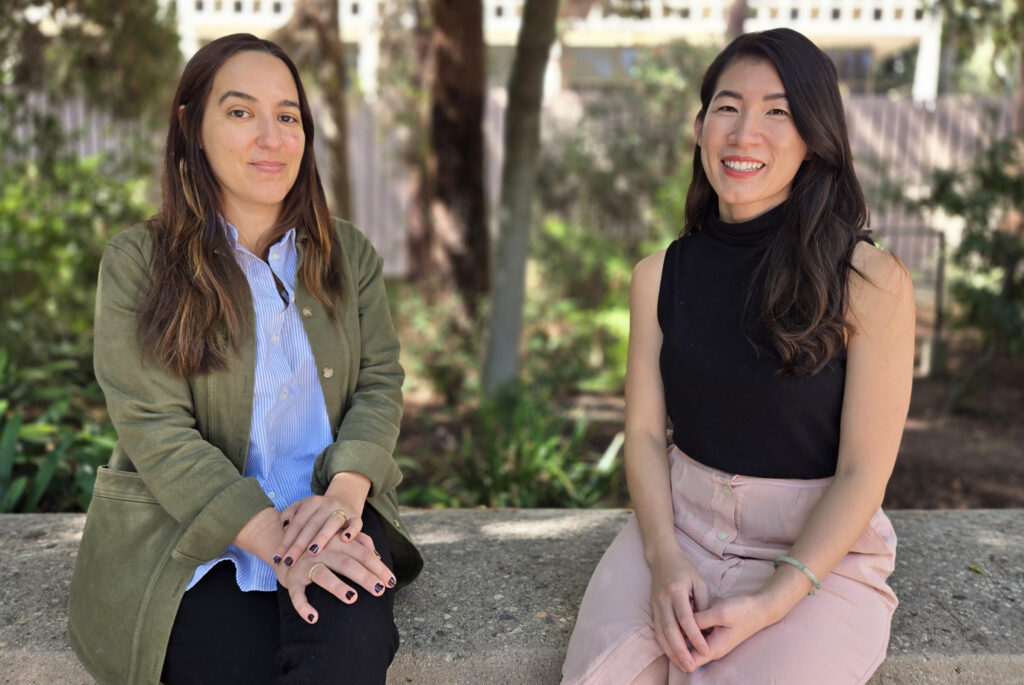
Professors Adriana Vazquez (left) and Kelly Nguyen are helping forge a new path for classical reception studies.
| October 7, 2025
To spark more abundant and expansive engagement with classical studies, some UCLA professors are bringing new attention to the discipline through an approach called “classical reception.”
Classical reception is the study of how literary texts and material culture from ancient Greece and Rome have been “received” — reused, adapted and reimagined throughout history and around the world.
Kelly Nguyen and Adriana Vazquez, assistant professors in the UCLA department of classics, are utilizing classical reception in their research and teaching to include more diverse histories, cultures and voices across geographies and time periods.
“Traditionally, classics teaching emphasized the study of the ancient world ‘in its own time,’ meaning in the original contexts,” Nguyen said. “The way I teach reception is by asking how we can study classics in a way that makes it ‘of the times.’ Classics is not some fixed treasure to be passed down as if in a vacuum. Rather, it is created and recreated.”
Now, Nguyen and Vazquez are helping forge the path for classical reception studies, not only at UCLA but also for other University of California scholars. On Oct. 9 and 10, the two will host a workshop aimed at building a curriculum in classical reception studies.
During the workshop, faculty from UCLA and six other UC campuses will discuss a shared vocabulary for the subfield, build course models and share pedagogical best practices; Nguyen and Vazquez plan to publish the results online to make syllabi and other resources available to scholars interested in advancing classical reception studies.
Capitalizing on sparks of interest
Though reception studies is relatively new as a formal subfield, reception as an idea has always been a part of classics.
“So much of our teaching of classical antiquity is already informed by our own impressions of antiquity,” Vazquez said. “Classical reception allows us to understand the discipline of classics itself as a kind of reception of antiquity. In this way, Greek and Roman antiquity can be viewed as dynamic and generative rather than monolithic and static.”
One major benefit of teaching with a classical reception approach is accessibility. Students might first encounter antiquity through popular contemporary media, such as the “Percy Jackson” book and film series and Ridley Scott’s “Gladiator” films. Those pop culture depictions of ancient Greek and Roman stories can give professors an opportunity to engage young scholars in classics studies.
“Classical reception studies helps connect that spark of interest to deeper exploration of the ancient world, showing students that their own cultural touchpoints are part of a much longer conversation,” Nguyen said.
Finding personal connections
Reception also offers scholars the chance to engage with ancient material in a more intimate and personal way.
“I had always struggled to reconcile my interest in classics with my own cultural heritage as Latina,” said Vazquez, a recipient of the 2024-25 Loeb Classical Library Foundation Fellowship. “Reception has been a way to marry those two aspects of my intellectual formation.”
For example, one undergraduate course she taught focused on Central and South American essayists, poets, religious figures and others who engaged with or adapted antiquity. Another covered depictions of Helen of Troy in antiquity and modernity. The class drew from material as varied as Homer’s “Iliad,” Sappho’s poetry, Wolfgang Petersen’s film “Troy” and even “The Simpsons.”
“The subject matter was Helen of Troy, but we touched on questions of the construction of gender, white supremacy, Eurocentric beauty standards and the male gaze,” Vazquez said. “There are many inroads to have those kinds of conversations, but classical reception always ends up being a really fruitful one.”
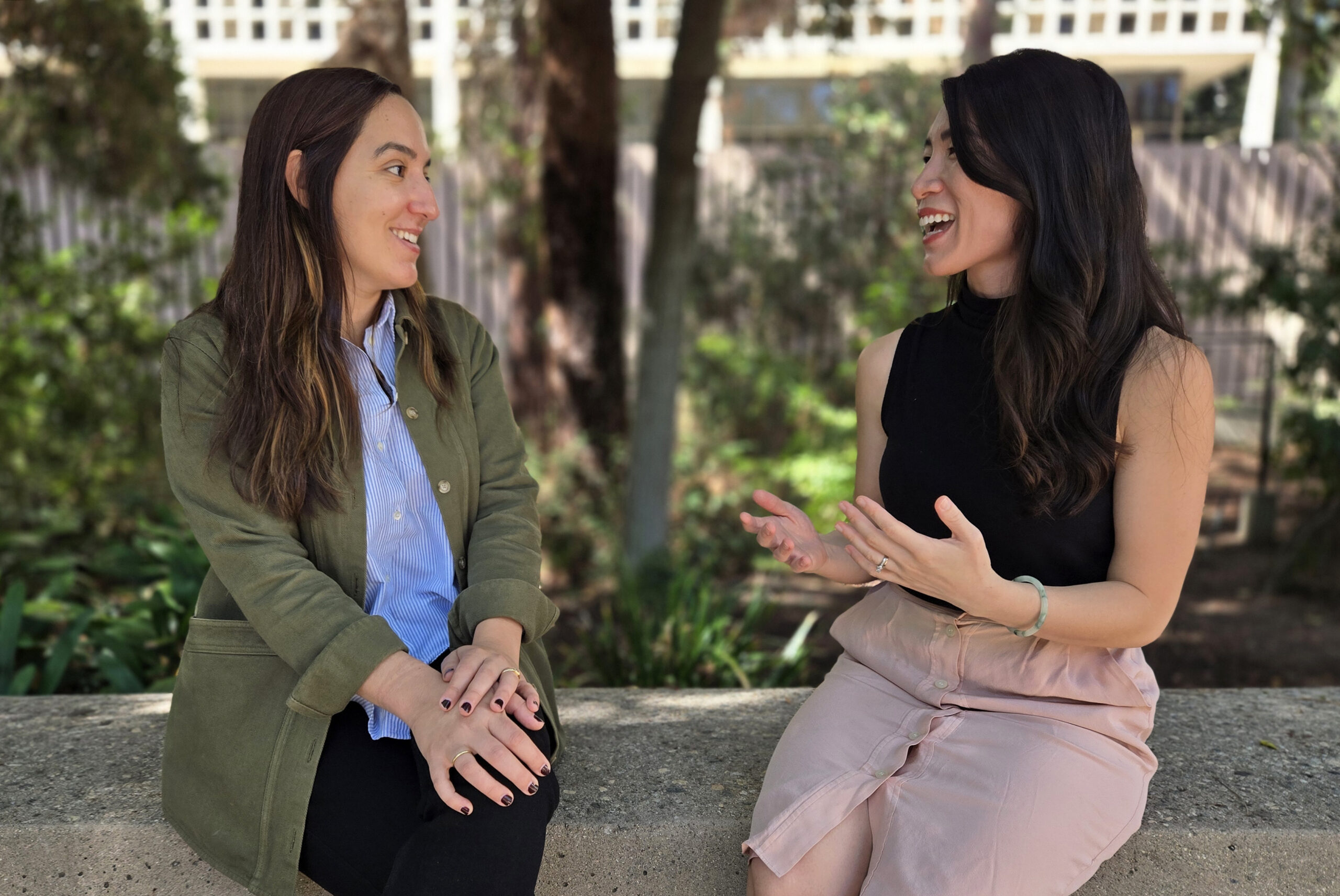
Vazquez (left) taught one course about Central and South American writers adapting antiquity; Nguyen has explored Asian and Asian American interpretations of antiquity.
Nguyen said teaching reception prompts students to exercise ethical and critical consciousness.
“A reception approach not only explores how antiquity has been taken up across time but also asks us to question how the idea of ‘the classical’ was formed in the first place, and whose voices it has historically excluded,” she said.
Thanks to a grant from the UCLA Mellon Data and Social Justice Curriculum Initiative, Nguyen developed an undergraduate course called “Decolonizing Refugee Data from Rome to Vietnam,” which she taught in spring 2025. The course investigated the politics of forced displacement with a focus on ancient Greece and Rome and contemporary Vietnam. Students worked with the Vietnamese Heritage Museum to create digital exhibits that help people better understand refugeehood across space and time; the course was cross-listed in digital humanities.
Giving students a voice
A year earlier, Nguyen led another newly developed class, “Asian and Asian American Classical Reception.” Students explored the history of Asian and Asian American engagement with Greco-Roman classical antiquity, and they worked in teams using materials from the class to create public-facing digital projects including presentation slides, Instagram pages, podcasts and digital zines.
“Since Asian classical reception is a relatively new subfield, students can and should play a key part in shaping its development and direction,” Nguyen said.
She plans to teach both reception courses again in spring quarter 2026.
Nguyen and Vazquez hope the workshop on Oct. 9 and 10 will contribute to the launch of a new collective focused on advancing classical reception studies in ways that are innovative, collaborative, and socially responsible.
“Classics departments are trying to teach reception, but many are building the plane as we fly it,” Vazquez said. “Most of us are of a generation that didn’t have pedagogic models for classical reception; we weren’t taught it as undergrads or graduate students. If we were, it was extremely rare. We have been experimenting on our own, and now we have so much to learn from each other.”